
Pilates board workouts have taken TikTok by storm recently, emerging as one of the hottest fitness trends on the platform. This fresh take on fitness blends traditional Pilates with a specialized reformer board. It gives fitness enthusiasts an affordable way to build abs and sculpt their bodies without spending big money on studio sessions.
The pilates reformer board is perfect for anyone who wants to do professional-quality exercises at home without feeling self-conscious as a beginner in public. Users can choose between quick 10-minute routines focused on booty and abs or detailed 30-minute full-body workouts. The pilates board creates the same experience as expensive Pilates equipment with just a simple board at home. These exercises are gentle on the body but still produce visible results, making them great for people of all fitness levels. A well-laid-out pilates board workout routine can lead to impressive body changes in 30 days – whether you want to build core strength, shape your glutes, or tone your entire body.
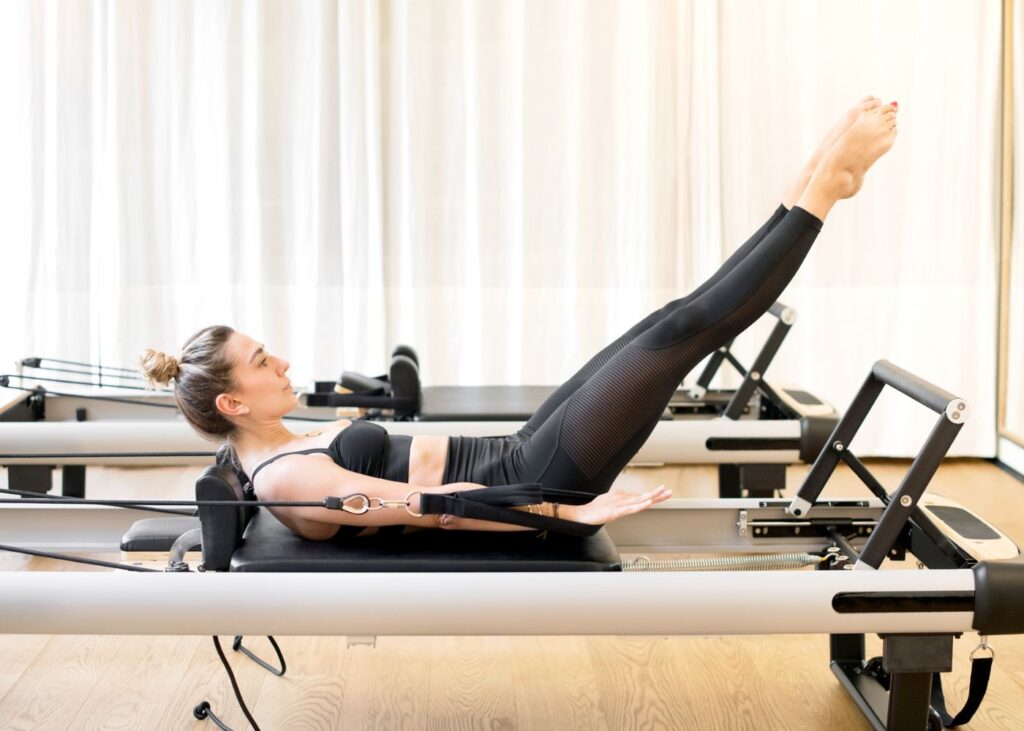
Week 1: Getting Started with the Pilates Board
Your first week with a pilates board will help you build confidence and learn simple movements. Your body needs time to adapt to this versatile equipment while developing core strength.
Plank arm extension
The plank arm extension helps beginners get comfortable with the pilates reformer board. This movement strengthens your core while working your arms and shoulders.
Here’s how to do the plank arm extension:
- Position your knees about a foot and a half behind your board to create space for full extension
- Place your hands on the handles with elbows resting on the pedals
- Your core should be tight as you extend forward until fully stretched out
- Stay in this extended position for one to two seconds
- Return to where you started with controlled movement
- Do your desired number of repetitions
This exercise mainly targets your core, so let your abs do the work instead of your legs. Keep your back straight and focus on slow, controlled movements that work your muscles effectively.
Arm shuffle rows
Once you’re comfortable with plank arm extensions, try arm shuffle rows. This exercise works both your core and upper body at the same time.
Start in the same plank position as arm extensions, with your body stretched forward and knees behind the pilates board. Instead of moving your whole body, stay extended and pull each arm to your chest one after another in quick succession.
Arm shuffle rows use faster movements than plank arm extensions to create different training effects. All the same, good form matters – keep your back straight and core tight throughout to get the most benefit and avoid injury.
Tips for proper form and breathing
Breathing is central to pilates board workouts. Traditional Pilates uses a specific pattern: breathe in through your nose, then make an audible exhale through pursed lips. This technique helps engage your diaphragm and draws air deep into your lower lungs for better oxygen exchange.
When you exhale through pursed lips, you create slight resistance that activates your inner core muscles – including your pelvic floor, diaphragm, and transversus abdominis. These muscles give you stability during exercises.
Your home pilates board sessions will improve if you follow these key principles:
- Picture holding a lemon under your chin to keep your head and neck lined up
- Your back should stay straight during all movements
- Keep your core tight, especially in challenging positions
- Control your movements rather than using momentum
- Let your breathing guide you – usually inhale as you extend and exhale as you flex
New users should master the movements before worrying about perfect breathing. You can add proper breathing patterns that feel natural for each movement as you get more comfortable.
By week’s end, you’ll have a strong foundation in pilates board techniques and be ready for more challenging exercises ahead.
Week 2: Building Core Strength
You’ve learned the simple moves in Week 1. Now your Pilates board experience gets more intense with targeted core exercises. Week 2 moves to building deeper core strength – the foundation that supports your body and improves stability.
Mountain climbers on the reformer board
Mountain climbers on the Pilates reformer board blend fitness basics with Pilates principles. This intermediate-level movement combines elements of the Long Stretch and Knee Stretch with a cardio boost.
Here’s how to do mountain climbers correctly:
- Face away from the board with your head furthest from the equipment
- Put your hands on the floor in an upper plank position with your feet on the pedals
- Keep your back straight and core tight throughout the exercise
- Pull one knee toward your chest while keeping your foot on the pedal
- Switch legs in a running motion while keeping your upper body stable
- Keep your core active to prevent side-to-side movement
The secret to effective mountain climbers is a straight back, locked upper body, and an active core throughout the exercise. This creates a challenging workout that builds ab strength and gives you cardiovascular benefits.
Knee tucks with resistance
Pilates knee tucks, also called plank tucks, are excellent for developing “bulletproof core muscles”. You can do this move on your Pilates reformer board using resistance to make the workout more challenging.
Follow these steps for proper knee tucks:
Start in a high plank position with hands on the bar shoulder-width apart. Put your feet back onto the reformer with toes tucked under. Your hips should line up with shoulders, and shoulders should stack over hands. Brace your core by pulling your belly toward your spine – picture wearing a corset that’s getting tighter around your middle. Draw both knees toward your hands while keeping your core tight. Hold briefly in the tucked position, then stretch your legs back to plank position.
Do 8-12 repetitions for 3-4 sets. Rest 30 seconds between sets. This exercise works your abs, obliques, and deep stabilizers like the transverse abdominis. It also targets your hips and glutes – parts of your core network that often get overlooked.
How to arrange your core effectively
A properly activated core is essential for all Pilates board exercises. Your core – or powerhouse – covers more than just ab muscles. It runs from your rib cage’s base to your buttocks’ base, including lower back muscles, hips, glutes, inner thighs, and pelvic floor.
Try this simple technique to practice proper activation: Pull your belly button toward your spine at full effort, reduce to half effort, then settle at quarter effort. Next, practice lifting through your pelvic floor (imagine stopping mid-stream while urinating). Finally, combine both actions at quarter effort to find the right engagement.
These core activation principles matter during your Pilates reformer board exercises:
- Keep a neutral pelvis when possible
- Use your exhale to pull abs inward for support
- Breathe naturally – inhale during extension and exhale during flexion
- Stay supple – balance activation and relaxation instead of constant tension
A strong core helps your stability, balance, and posture. It makes everyday activities easier, from bending and twisting to lifting heavy objects. Getting better at core activation this week builds the foundation for more advanced moves in your upcoming Pilates board workout experience.
Week 3: Lower Body Focus
Week 3 brings a new focus to your Pilates board experience. You’ll now work on building powerful, stable lower body muscles. Your solid foundation and stronger core from previous weeks have prepared you for exercises that improve leg strength, hip stability, and glute activation.
Lunges using the Pilates board
Lunges on the Pilates reformer board are a great way to work multiple muscle groups at once. This powerful move targets your hips, glutes, quads, hamstrings, calves, and core when done right. Each side of your body develops evenly because lunges are a one-sided exercise. This helps your posture and reduces compensation patterns.
Here’s how to do lunges correctly on your Pilates board:
- Face the foot bar and place hands onto it shoulder-width apart
- Press one foot against the shoulder rest with the knee off the carriage
- Put the other foot on the ground next to the reformer
- Pull in abdominal muscles and keep your torso upright
- Exhale as you extend the leg on the carriage while bending the standing leg
- Inhale as you return to starting position
Your knees should stay in line with your toes. Keep your core tight throughout the movement.
Glute bridges with resistance bands
Glute bridges make your posterior chain stronger, including glutes, hamstrings, and spine erectors. The resistance bands add intensity to this Pilates board exercise and activate more muscle fibers.
Follow these steps:
- Lie on your back with knees bent and feet flat on the Pilates board
- Put a resistance band across your hips and secure it to the ground with your hands
- Tighten your core and squeeze your glutes as you lift your hips up
- Make a straight line from knees to shoulders at the top
- Hold for 1-2 seconds before lowering down
People who sit at desks all day will find this exercise helpful. It lengthens tight hip flexors and helps with hip extension that gets limited from sitting too long.
Balance and stability tips
Pilates board workouts improve your balance. These exercises build core strength, increase flexibility, and boost proprioception – how well you sense your body’s position.
Here’s how to stay balanced during Pilates reformer board exercises:
- Keep your spine neutral
- Time your breathing – inhale to prepare, exhale with effort
- Keep deep core muscles tight throughout
- Spread your weight evenly on both feet during standing exercises
- Start with easier versions if balance is hard
The foot bar can help with balance during lunges when placed vertically. You can also use less spring resistance to work on stabilizing muscles.
Week 3’s focus on lower body strength builds the foundation for everyday movements. This prepares you for the combined exercises coming in your final week.
Week 4: Upper Body and Full Body Integration
The final week of your 30-day pilates board experience focuses on upper body strength among other full-body movements. Your previous work on core and lower body exercises creates a solid base to learn more advanced movements.
Arm extensions with cables
The cables on your pilates reformer board help sculpt and strengthen your upper body through arm extensions. Here’s how to do them right:
- Stand in the middle of your board like you’re on a surfboard
- Hold the cables on each side with slightly bent knees
- Keep your back straight and core tight throughout
- Lift your arms to the sides at 90 degrees, with a small bend in your elbows
- Lower them with control, without swinging
You can vary the speed of this exercise but always control the movement from your arms instead of using momentum. The cable’s resistance creates tension that builds your shoulder’s and arm’s strength.
Bicep curls on the board
The pilates board’s bicep curls target your arms while working your stabilizing muscles. Follow these steps:
Stand at the board’s center with cables beside you. Start with your arms down and curl the cables up to your chest using your bicep strength. Mix it up by crossing your arms (right arm curls toward left shoulder). Your core should stay tight throughout.
This move builds your biceps brachii muscles as you work against the spring’s resistance to control the downward motion. Standing while doing this also strengthens your transversus abdominis for better torso stability.
Combining upper and lower body movements
The pilates board shows its true value when you combine upper and lower body moves. This combination creates a complete training effect that matches how we move in daily life.
Try these combinations:
- Squat with arm press: Drop into a squat as you push your arms forward
- Lunge with bicep curl: Step back into a lunge while curling your arms
- Plank with row: Hold a plank and row your arms one at a time
These combined exercises work multiple muscle groups at once for an efficient workout. They also help improve your coordination and balance while giving you a better cardio challenge.
Your 30-day pilates board experience concludes with a perfect mix of strength, stability and movement patterns that change your whole body.
Bonus Tips for Success in Your 30-Day Plan
Strategic tracking and scheduling can make all the difference in your 30-day pilates board workout plan. These practical tips will help you succeed with the pilates reformer board.
How to track your progress
Consistent monitoring leads to success with pilates board workouts. Start a progress journal to document your experience and note which exercises become easier. You can track improvements in several ways:
- Physical measurements: Take photos and measurements before you start, and wear the same clothes when comparing progress
- Strength markers: Write down how long you hold challenging positions like planks and count your repetitions
- Flexibility improvements: Keep track of your stretch reach distance – see if those toes are getting closer
Creating a weekly workout schedule
New practitioners should aim for 2-3 pilates board sessions each week with 24-48 hours of recovery between workouts. A balanced plan looks like this:
- A 3-day split (upper body, lower body, core/cardio)
- Active rest days that include gentle walking or stretching
- Morning sessions and maybe even one evening workout
Your body will tell you when you’re ready to increase to 4-5 weekly sessions, so listen to those rest signals carefully.
Using a Pilates board workouts PDF or app
Digital tools can boost your at-home pilates board experience:
- Free pilates reformer exercise charts are available as PDFs for quick reference
- Specialized apps like Pilates Anytime offer custom workout playlists and structured programs
- Fitness trackers paired with apps give you detailed progress insights
These tools will keep you motivated throughout your 30-day pilates board exercise experience.
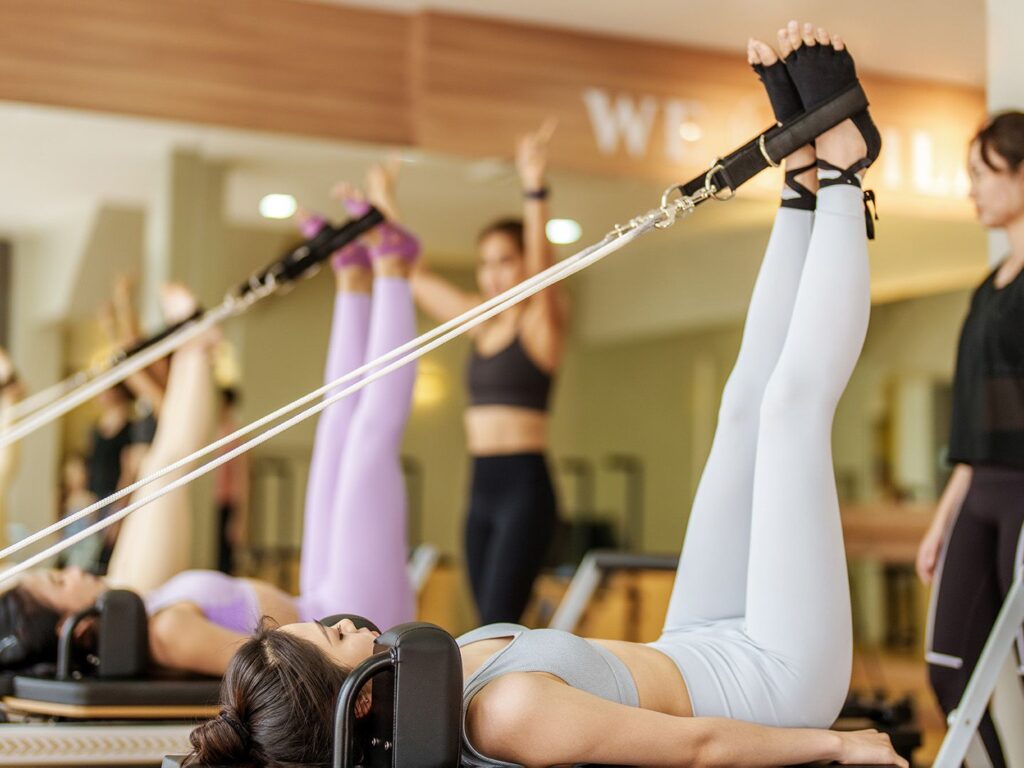
This 30-day Pilates board workout plan gives you a simple way to transform your body without expensive studio memberships. The full program helps fitness enthusiasts build stronger cores, better stability, and more defined muscles throughout their bodies. Without doubt, you’ll develop proper form and technique as the plan progresses from basics to more complex integrated movements before taking on challenging exercises.
Pilates board workouts are different from regular fitness routines. They blend strength training, flexibility, and balance work into one complete system. You won’t need multiple workout types to get the results you want. The low-impact nature of these exercises makes them perfect for anyone, whatever their age or fitness level.
Your success with this plan depends on staying consistent and patient. Your body will adapt to new movement patterns and strength requirements over time. Some people see changes in two weeks, but the best results show up after finishing the full 30-day cycle.
People who complete this program often discover what their bodies can really do. The Pilates reformer board brings studio-quality workouts home at a fraction of the cost. This makes high-quality exercise available to more people.
The 30-day Pilates board plan offers detailed benefits for everyone. You might want to build a stronger core, fix your posture, develop leaner muscles, or add something new to your fitness routine. The mix of targeted exercises, proper progression, and full-body training creates a lasting approach that goes beyond your original month of training.
Pilates board workouts shine because they’re simple yet powerful. A single board becomes your complete home gym. You can sculpt your body without complex equipment or packed fitness centers. If you’re ready for physical change, this 30-day plan could be your path to better strength, flexibility, and overall wellbeing.
Here are some FAQs about pilates board workouts:
Is 20 minutes of Pilates a day enough to see results?
Yes, 20 minutes of consistent Pilates a day can be enough to see initial results, particularly in improved posture, core engagement, and muscular endurance. For more significant strength gains or body composition changes, longer or more intense sessions may be needed over time. Incorporating varied pilates board workouts into this daily practice can enhance the effectiveness.
Can Pilates flatten the belly?
Pilates can significantly strengthen and tone the deep core muscles, which can lead to a flatter, more supported abdominal appearance. However, visible flattening also requires a reduction in overall body fat, which is achieved through diet and cardiovascular exercise. Consistent pilates board exercises that target the transverse abdominis are particularly effective for building this core stability.
What can I do on a Pilates board?
A Pilates board, or Reformer board, allows you to perform a wide range of exercises that build strength, flexibility, and balance. You can do classic moves like footwork, leg circles, and rowing series using the resistance of the springs. Setting up a pilates board at home enables you to explore these varied pilates board workouts for a full-body routine.
What are the 6 rules of Pilates?
The six fundamental principles or rules of Pilates are Concentration, Control, Centering, Flow, Precision, and Breathing. These principles guide every movement to ensure it is performed with maximum effectiveness and mindfulness. Applying these rules is key whether you are on a mat or using a pilates reformer board for your exercises.
What is the 10 20 30 rule in Pilates?
The 10 20 30 rule in Pilates is a specific breathing pattern where you inhale for a count of 10, hold the breath for a count of 20, and exhale for a count of 30. This advanced breathing technique is used to enhance concentration, control, and the engagement of deep core muscles during difficult exercises. It can be integrated into challenging pilates board workouts to increase their intensity.
Can Pilates change your body in 2 weeks?
You may begin to feel positive changes in your posture, core strength, and mind-body connection within two weeks of consistent Pilates practice. Visible physical changes in muscle tone or definition usually require a longer commitment of several weeks or months. Using equipment like a pilates board at home can accelerate these initial improvements by adding resistance.
What is the 80 20 rule in Pilates?
In Pilates, the 80/20 rule often refers to the concept that 80% of your effort or focus should come from your core (center), while 20% comes from the limbs performing the movement. This principle ensures movements are powered from the powerhouse for efficiency and safety. This is a crucial focus during pilates board exercises to maximize their benefit.
What are the disadvantages of Pilates?
Some disadvantages of Pilates can include the high cost of studio classes or equipment like a pilates reformer board, and the initial learning curve for proper form. Without correct instruction, there is also a risk of performing exercises improperly, which could lead to strain or injury. It may also provide less cardiovascular benefit compared to other forms of aerobic exercise.