
A mother named Lena once told her prenatal teacher her midwife wanted her in the knee chest position. The teacher froze, because she only knew the gentle yoga shape, and the midwife meant something clinical and urgent. That gap is the whole problem with this phrase. The same four words describe a hospital exam posture, a relief move for a blue infant, an obstetric emergency hold, and a soft yoga stretch, and most pages cover only one. This guide maps all four, because the knee chest position means something different depending on who is searching, and gravity is the only thing they share, shifting abdominal organs to change pressure inside the pelvis and chest. That is exactly why clinicians reach for the knee chest position in cord prolapse, an event affecting 0.1 to 0.6 percent of births (ACOG, 2017).
Table of Contents
- 1 What the Knee Chest Position Actually Means
- 2 The Knee Chest Position in Medical Exams
- 3 Knee Chest Position for Infant Tet Spells
- 4 Knee Chest Position in Labor and Breech Repositioning
- 5 The Yoga Version: Knee to Chest and Apanasana
- 6 How the Knee Chest Position Affects the Body
- 7 Contraindications and Safety Lines
- 8 Props, Modifications, and the Wheel Pose Mix-Up
- 9 When Each Context Applies and What the Shared Mechanism Means
- 10 FAQs about knee chest position
- 10.1 What is the knee chest position used for?
- 10.2 How long can you stay in the knee chest position?
- 10.3 Is the knee chest position safe during pregnancy?
- 10.4 What is the difference between knee chest position and child’s pose?
- 10.5 How does the knee chest position help a tet spell?
- 10.6 What is open knee chest position in labor?
- 10.7 Is knee to chest the same as Apanasana?
- 10.8 Who should avoid the knee chest position?
- 10.9 Does the knee chest position help back pain?
- 10.10 How do clinicians protect privacy in the knee chest position?
What the Knee Chest Position Actually Means
The knee chest position is a posture where the body kneels with chest and head lowered, hips flexed, and buttocks elevated, used so gravity displaces abdominal organs away from the pelvis and lower back (StatPearls, 2024). That single mechanical fact powers four very different jobs. A clinician uses it during certain exams. A caregiver uses it to ease an infant’s cyanotic spell. A birth team uses it to relieve a compressed cord or coax a stuck baby. A yoga practitioner uses a related supine version to calm the nervous system. Same shape family, wildly different stakes, which is why disambiguating first protects the reader from acting on the wrong meaning.
The four contexts at a glance
Medical exam: a brief, draped posture for some rectal, gynecologic, and lumbar procedures. Cardiac tet spells: an emergency adjunct for infants with cyanotic heart disease. Labor and breech work: cord prolapse relief and open knee chest for a malpositioned baby. Restorative yoga: the gentle supine Apanasana for relaxation. Each gets its own section below.
Why the same shape does different jobs
The mechanics are fixed, but the target organ changes. In an exam, the inverted hips shift the weight of the bowel and uterus toward the diaphragm, which can slow venous return from the legs and is part of why the posture is held only briefly. In a cyanotic infant, folding the knees hard against the chest compresses the femoral arteries and raises systemic vascular resistance, which pushes blood toward the lungs instead of letting it shunt the wrong direction across a heart defect. In labor, lowering the chest and raising the hips tilts the pelvic inlet, opening room at the brim for a baby’s head to reposition. In yoga, the slow spinal flexion of the supine version, paired with a long exhale, stimulates the vagus nerve and nudges the body toward parasympathetic calm. The reader should match the mechanism to the goal rather than the label.
The Knee Chest Position in Medical Exams
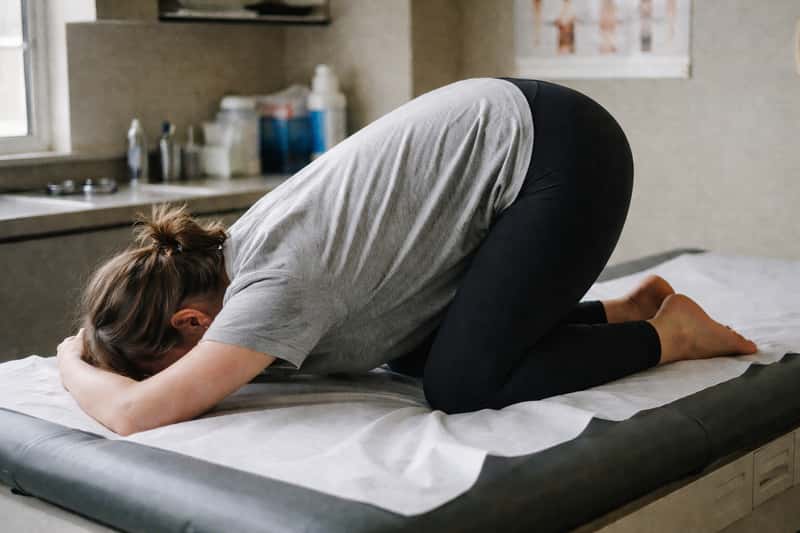
Clinical sources use this term first, so the bare-phrase searcher deserves the medical meaning up front. In the exam version, the patient kneels, lowers the chest and head to the surface, flexes the hips, and raises the buttocks, with pillows under the chest so the neck is not hyperflexed and the airway stays open (StatPearls, 2024). It shows up in some rectal, gynecologic, and lumbar procedures. It is held briefly and for access, never for comfort, and it is monitored the entire time.
Step-by-step setup and draping
- Kneel on a padded surface with knees hip-width.
- Lower the chest and one cheek onto a pillow so the neck stays neutral.
- Flex at the hips and let the buttocks rise.
- Rest arms forward or beside the head.
- A drape covers everything except the area being examined.
Clinical pages skip the human side, so it deserves plain naming. This is a vulnerable, exposed position. A patient can ask what will happen before it happens, request the room cleared of nonessential people, and say stop at any moment. Consent is ongoing, not a one-time signature, and a good clinician narrates each step so nothing comes as a surprise.
Knee Chest Position for Infant Tet Spells
Parents of children with cyanotic congenital heart disease search this directly, often in a panic. During a hypercyanotic spell in conditions like tetralogy of Fallot, the heart defect lets oxygen-poor blood cross from the right side to the left without passing through the lungs, which is what turns the child blue. Folding the child into a knee chest position presses the bent legs against the abdomen and compresses the femoral and abdominal arteries, raising systemic vascular resistance in the body. That higher resistance on the systemic side makes it harder for blood to take the wrong shortcut, so more of it is forced through the pulmonary route and oxygen saturation improves (StatPearls, 2024). It is an adjunct that buys minutes, never a replacement for emergency care.
When to use it and when to call for help
A spell looks like sudden deepening blue color, fast breathing, irritability, then limpness. A caregiver holds the infant with knees pressed firmly toward the chest, or an older child can squat. Staying calm and keeping the airway clear matters. Emergency services should be called immediately, because positioning is a holding action while real help arrives, not the treatment itself.
Knee Chest Position in Labor and Breech Repositioning
This is the highest-intent birth query, and it splits into two uses that should never be confused. One is a true obstetric emergency. The other is a targeted repositioning tool with a sharp contraindication.
Cord prolapse: an emergency move, not a comfort pose
When the umbilical cord slips ahead of the baby through an open cervix, a provider places the birthing person knees-to-chest, or in an exaggerated Sims position, to relieve pressure on the cord while delivery is prepared (ACOG, 2017). This is provider-directed and short-term. If this is called for in a labor room, it is a clinician’s decision, and the only correct response from anyone outside the medical team is to defer to that clinician.
Open knee chest for a stuck baby at the brim
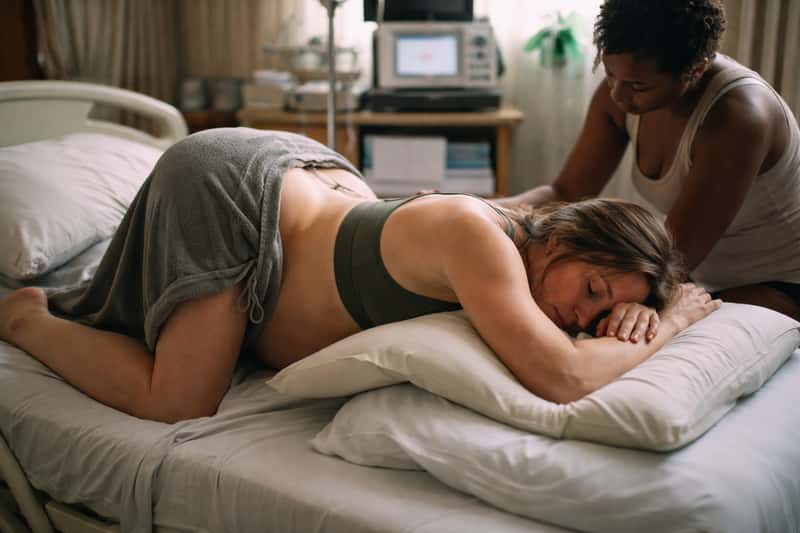
Here is the detail competitors miss. Open knee chest is a targeted tool for a head-down baby that is asynclitic or stuck at the brim, where opening the pelvic inlet gives the baby room to reposition. It is not a general fix for late-pregnancy aches. The hard line: it is contraindicated when a head-down baby is high and floating, because that creates room for the cord to slip down ahead of the baby. Specificity is the safety feature.
Step-by-step open knee chest setup
- With provider guidance, kneel on a soft surface.
- Lower the chest and forearms down so the bottom is the highest point.
- Keep the head turned to one side, neck soft.
- Hold only as long as the provider advises, often a few contractions.
- Stop and call the provider if dizziness, breathlessness, or any new pain appears.
The Yoga Version: Knee to Chest and Apanasana
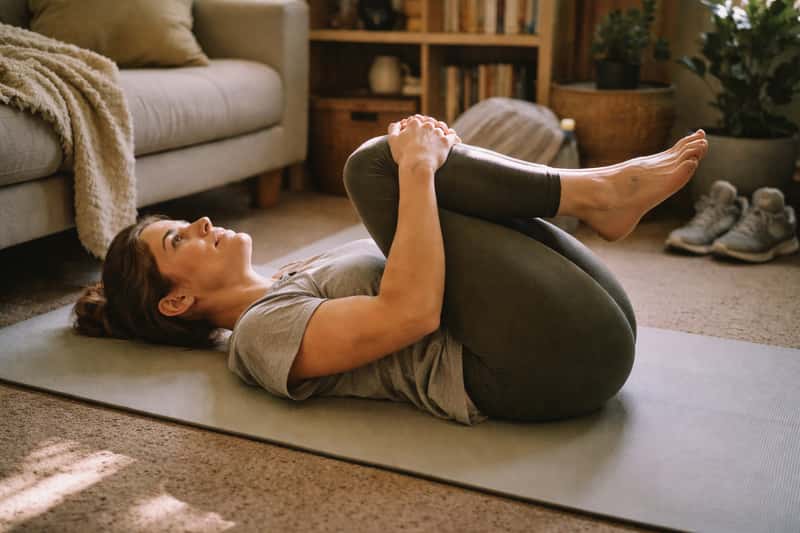
Here the birth-curious reader and the yoga practitioner finally meet. Apanasana, the supine knee to chest position, is a gentle pose where the practitioner lies on the back and draws both knees toward the chest. The gentle spinal flexion plus slow exhale nudges the body toward parasympathetic calm, which is why it belongs in the same family as child’s pose and the broader somatic work covered in our somatic yoga practice guide. This is the relaxation context the clinical versions are not.
How to do Apanasana step by step
- Lie on the back with knees bent, feet on the floor.
- On an exhale, draw both knees toward the chest.
- Hold the shins or the backs of the thighs.
- Let the lower back soften and lengthen into the floor.
- Breathe slowly, letting the inhale create space and the exhale deepen the fold.
Apanasana versus the medical knee-chest shape
The two should not be conflated. Apanasana is supine, weight on the back, spine supported by the floor, purpose restorative. The medical knee-chest shape is kneeling, weight on chest and knees, buttocks elevated, purpose clinical access or emergency relief. Same name family, opposite orientation, different reason entirely.
How the Knee Chest Position Affects the Body
Every use traces back to one mechanism: gravity shifts the weight of abdominal organs, which changes spinal alignment, pelvic pressure, blood pressure, and venous return. The same posture that helps one body harms another, which is the whole reason context matters more than the label.
Circulation, breathing, and venous return
In a cyanotic infant, the position raises systemic vascular resistance and improves oxygenation, a clear win. In other patients, that same posture can impair venous return and is wrong for anyone with hemodynamic instability or respiratory distress (StatPearls, 2024). Pillows under the chest keep the neck from hyperflexing so the airway stays open. The trade-off is real, which is why clinicians hold it briefly and watch vitals the entire time.
Contraindications and Safety Lines
This is the checklist competitor pages leave out. It should be matched to the situation before anyone tries the shape, and read next to our restorative pose safety comparison with wheel pose so no one assumes every chest-down shape is gentle.
Who should skip it entirely
| Avoid if | Why |
|---|---|
| Head-down baby high and floating | Increases cord prolapse risk |
| High blood pressure | The inverted hips raise venous return to the chest and increase pressure in the head and thorax, which can spike already-elevated blood pressure |
| Acute disc or spinal issues | Flexion and load can worsen injury |
| Recent abdominal surgery | Pressure and folding strain healing tissue |
| Hemodynamic instability or respiratory distress | Impairs venous return and breathing |
When to stop and when to call a provider
Stop immediately for dizziness, breathlessness, sharp pain, numbness, or any worsening of symptoms. For the cardiac, exam, and labor contexts, the position is provider-directed, so the safest step is to contact a clinician or emergency services rather than improvising. This guide is informational. It does not replace a provider, and the safest move when in doubt is always to defer to the person managing care.
Props, Modifications, and the Wheel Pose Mix-Up
The gentle knee chest position should never feel like effort. For the supine Apanasana, a bolster under the head and a folded blanket under the sacrum take pressure off the lower back. For larger bodies or tight hips, holding the backs of the thighs instead of the shins gives the belly room so the knees do not force into the chest. If knees are sensitive, a slight space between them helps. The common confusion is worth clearing up now: this is a low-effort restorative shape, not a deep backbend. Wheel pose is the opposite, a demanding heart-opening arch with its own contraindications for wrists, shoulders, and spine. For a gentle reset, the knee to chest position is the right move. For more accessible floor work, our beginner home yoga flow keeps the same low-strain principle.
Prop setups for different bodies
A bolster lengthwise under the spine creates a supported variation that needs almost no muscular effort. Blocks slide under each elbow when the hands hold the thighs. A blanket behind the knees helps anyone with knee discomfort. The goal is a shape that can be held and relaxed into, never one to brace against.
Every version of the knee chest position works through the same lever: gravity moves the weight of the abdominal organs, and that single shift either drains pressure, redirects blood flow, opens the pelvis, or quiets the nervous system depending on how the body is oriented and how long the shape is held. Reading that mechanism is what tells each reader whether their situation is gentle or urgent. The yoga practitioner gets a supine, supported pose held for slow breaths to calm the body, and it is theirs to use freely. The exam patient gets a brief, draped, monitored posture, and consent stays active the whole time. The parent of a child with a heart defect gets an emergency holding action that raises systemic resistance while emergency services are on the way. The birthing person gets a tool that is either a provider-directed cord prolapse response or a targeted brim-repositioning move that is unsafe when a head-down baby is high and floating. The shape looks similar across all four. The stakes do not, and matching the right meaning to the right body is the difference between a missed benefit and a real emergency.
FAQs about knee chest position
What is the knee chest position used for?
It serves four separate purposes: clinical exam access, easing infant cyanotic spells, relieving a prolapsed cord or repositioning a stuck baby in labor, and gentle nervous system relaxation in yoga. The setting decides the use.
How long can you stay in the knee chest position?
The clinical version is short-term and monitored, often only minutes during an exam or emergency. The gentle yoga Apanasana can be held comfortably for several slow breaths, but it should stop the moment anything feels strained or dizzy.
Is the knee chest position safe during pregnancy?
It can be, but only in specific cases under provider guidance. Open knee chest is contraindicated when a head-down baby is high and floating because of cord prolapse risk, so it is never a default comfort move for late-pregnancy aches.
What is the difference between knee chest position and child’s pose?
Child’s pose and the medical knee chest shape both kneel forward, but the clinical version elevates the buttocks for access or emergency relief, while child’s pose rests the body for comfort. They look similar and serve opposite purposes.
How does the knee chest position help a tet spell?
It compresses the leg and abdominal arteries, which raises systemic vascular resistance and reduces right-to-left shunting in conditions like tetralogy of Fallot, improving oxygen saturation. It is an adjunct that buys time and never replaces emergency care.
What is open knee chest position in labor?
It is a targeted posture that opens the pelvic inlet to help a head-down baby that is asynclitic or stuck at the brim reposition. It is used with provider guidance, not for general discomfort.
Is knee to chest the same as Apanasana?
Yes, in the yoga context. Apanasana is the supine knee to chest pose where the practitioner lies on the back and draws the knees toward the chest, distinct from the kneeling clinical posture that shares the broader name.
Who should avoid the knee chest position?
Anyone with a head-down baby that is high and floating, high blood pressure, acute disc or spinal issues, recent abdominal surgery, or hemodynamic instability or respiratory distress. When in doubt, a provider should be consulted first.
Does the knee chest position help back pain?
The gentle supine Apanasana can ease lower back tension through soft spinal flexion and slow breathing. It is not a treatment for acute disc problems, which are a contraindication, so a clinician should handle sharp or radiating pain.
How do clinicians protect privacy in the knee chest position?
They drape everything except the area being examined, clear nonessential people from the room, and narrate each step. The patient can ask what will happen, request changes, and stop at any point, since consent stays active throughout.