
Picture your little one giggling as they stretch like a cat, balance like a tree, or flutter like a butterfly, all while learning body awareness and focus. Yoga turns into a playful adventure for preschoolers when each pose sparks imagination and movement instead of strict form. Parents and teachers can turn simple stretches into engaging stories that build strength, coordination, and a sense of calm. Let’s explore the most joyful and easy kid yoga poses for 4 that make everyday play feel like mindful movement.
Why 4-Year-Olds Love Yoga (And Why It Works)
Four-year-olds thrive on movement, imagination, and imitation, which makes yoga a natural fit for their stage of development. Kid yoga poses for 4 mix storytelling with physical activity, helping children channel their endless energy into mindful play. Because yoga feels like pretend instead of structured exercise, it encourages learning through curiosity and fun.
At this age, children are refining balance, coordination, and focus. Poses like Tree or Downward Dog promote body awareness and strength, while calming shapes like Butterfly or Child’s Pose support emotional regulation. Pediatric wellness sources such as Nemours KidsHealth and Harvard Health Publishing note that yoga helps kids develop self-soothing skills and improves mood. When practiced playfully, it supports both physical growth and emotional resilience, laying the foundation for lifelong healthy habits.
Best Animal-Themed Kid Yoga Poses for 4-Year-Olds
Downward-Facing Dog
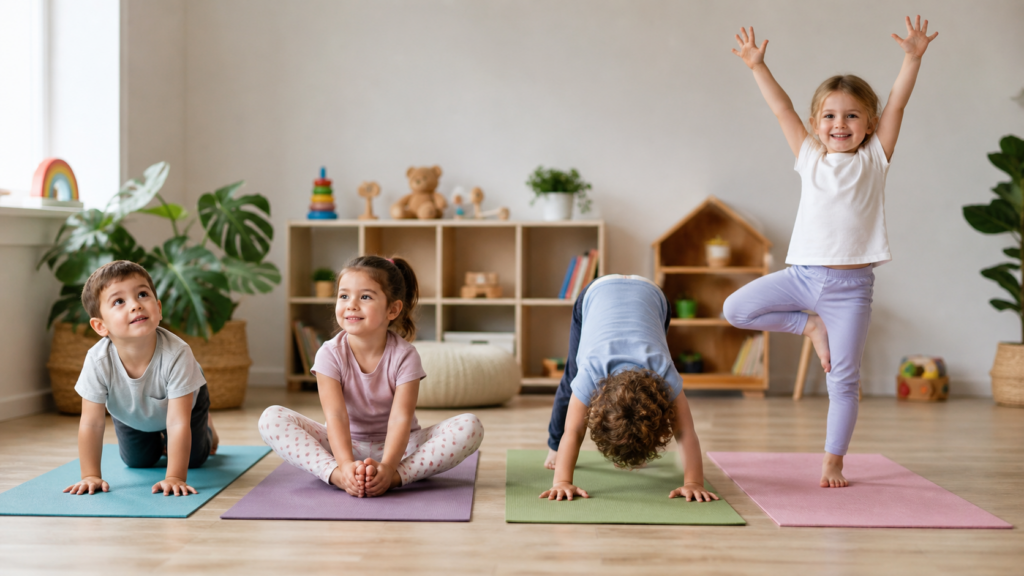
In this favorite pose, kids place their hands and feet on the floor and lift their hips, forming an upside-down “V.” Invite them to imagine being playful puppies wagging their tails. Experts from Yo Re Mi Kids mention that Downward Dog feels natural because many children move through this shape while learning to stand. It strengthens the arms, legs, and core while stretching the spine, making it one of the easiest yoga poses for 4-year-olds.
Cat-Cow Pose
Start with children on their hands and knees. As they inhale, they drop their bellies and lift their heads for Cow Pose, then round their backs and meow for Cat Pose. The silly sound effects hold their attention while promoting gentle spinal movement. A few rounds help them connect breathing with motion, building focus and flexibility.
Cobra Pose
While lying on their bellies, kids press their palms into the floor and lift their chests like hissing snakes. Cobra Pose strengthens the back and core while encouraging good posture. This one fits easily into a story—maybe “slithering through the jungle”—keeping kids engaged in imaginative play as they build strength.
Butterfly Pose
Kids sit with the soles of their feet together and gently flap their knees like fluttering wings. Butterfly Pose opens the hips and encourages calm breathing. It’s a great way to transition, helping children slow down after energetic movement while staying playful.
Frog Pose
Have kids squat with their feet wide, hands on the floor between their legs. They can hop like frogs or hold the shape while bouncing gently. This lively pose builds leg strength and helps release excess energy, making it perfect before moving into quieter activities.
Fun Standing Kid Yoga Poses for 4-Year-Olds
Tree Pose
Tree Pose invites focus and balance. Have children stand tall, lift one foot, and rest it against the opposite ankle or calf. Hands can press together at the heart or stretch overhead like branches. Wobbling is part of the fun—each try helps build stability and concentration. Encourage them to feel like trees sending roots into the ground to stay steady.
Mountain Pose
Standing tall with arms by their sides, children learn to feel grounded and confident. Mountain Pose teaches posture awareness and stillness, serving as the base for many other poses. It’s a gentle way to introduce mindfulness through simple alignment and calm breathing.
Star Pose
From Mountain Pose, ask kids to step their feet apart and stretch their arms wide like shining stars. This open position boosts confidence, expands the chest, and energizes the body. Many teachers use it as a bridge between balancing and floor poses, helping children refocus before continuing.
Calming Floor Poses for Winding Down
Happy Baby Pose
Kids lie on their backs, grab their feet, and gently rock side to side. This relaxing pose stretches the hips and lower back while calming the nervous system. It’s a soothing way to end a yoga flow, especially for preschoolers who need help settling down after lots of movement.
Sphinx Pose
In Sphinx Pose, children rest on their bellies with forearms flat and chest lifted. The gentle backbend strengthens the spine and opens the chest without requiring much coordination. It supports calm breathing and can be framed as “a proud lion resting,” helping them stay still with purpose.
Child’s Pose
From a kneeling position, children fold forward, resting their forehead on the floor with arms stretched out or tucked beside them. This resting pose helps them feel safe and grounded, offering a quiet pause. You can describe it as a “turtle shell” shape they can return to whenever they need a break.
How to Build a Simple Yoga Sequence for a 4-Year-Old
A balanced yoga flow for preschoolers should include about 5–8 poses lasting 10–15 minutes. Start with standing poses like Mountain and Tree to build balance and confidence. Move into animal-themed poses such as Cat-Cow, Downward Dog, and Frog for energy and fun. Finish with calming shapes like Butterfly, Happy Baby, and Child’s Pose to encourage relaxation.
Storytelling keeps sequences lively. For example, guide kids through a “forest adventure,” beginning as tall trees, moving like cats and dogs, and ending as quiet butterflies resting on flowers. Keeping each pose under 30 seconds maintains interest while supporting focus and coordination.
Tips to Keep 4-Year-Olds Engaged During Yoga
Keeping engagement high is key when teaching fun kid yoga poses for 4. Use animal noises, funny voices, or quick games to keep energy up. Props like stuffed animals or scarves make sessions interactive, while visual aids such as printable pose cards help kids remember the shapes. Skip long holds or strict form; celebrate creativity and movement instead.
Partner yoga between parent and child boosts bonding and motivation. Try Tree Pose side by side or Happy Baby together for laughter and connection. The goal isn’t precision but playfulness, encouraging kids to move freely while gaining confidence in their growing bodies.
Easy Ways to Make Kid Yoga a Daily Habit
Incorporating easy kid yoga poses for 4 into daily routines makes practice consistent without effort. Morning stretches like Star and Mountain prepare them for the day, while bedtime poses such as Butterfly or Child’s Pose help them relax. Short sessions after naps or playtime reinforce body awareness and smooth transitions.
Free printable pose cards and short YouTube videos make practicing simple at home or in classrooms. Over time, daily yoga nurtures focus, confidence, and emotional balance. When yoga becomes part of daily life, kids learn to balance energy and calm naturally, supporting healthy growth and joyful movement throughout childhood.
In the middle of your child’s yoga journey, it’s helpful to understand the wider benefits of mindful movement, many supported by research from trusted sources such as stress-reducing practices for children that encourage emotional regulation and mental clarity.
Little Yogis, Big Benefits
Yoga gives four-year-olds a joyful way to move, imagine, and connect with their growing bodies. Through playful poses and storytelling, they learn balance, focus, and calm without pressure. Each animal-inspired stretch or breathing moment becomes a chance to explore movement with curiosity and confidence. Parents and teachers who weave these easy kid yoga poses into daily life help children develop habits of mindfulness and resilience. The simple act of turning yoga into play can nurture both physical and emotional well-being, creating a foundation for growth that reaches far beyond the mat.
FAQs about kid yoga poses for 4
What are the best beginner yoga poses for 4-year-olds?
Animal-themed poses like Downward-Facing Dog, Cat, Cow, and Tree Pose are perfect for beginners because they combine imagination with strength and balance. These poses are simple, need little coordination, and can be held for under 30 seconds, matching young children’s attention spans.
How do you teach Downward Dog to preschoolers?
Make it fun by asking your child to pretend they’re a dog and to wag their tail while in the pose. Most 4-year-olds move naturally through this position when going from crawling to standing, so turning it into imaginative play helps them learn through enjoyment rather than instruction.
Are animal-themed yoga poses effective for kids under 5?
Yes, animal-themed poses work wonderfully because they tap into children’s love of imaginative play while building strength, flexibility, and balance. Research shows that poses like Cat, Cobra, Dog, and Butterfly keep young kids engaged and inspired to practice regularly.
What yoga poses help with balance and calming for toddlers?
Tree Pose, Happy Baby, and Sphinx are great for developing balance and promoting calm without needing advanced coordination. These can be part of short sequences that help 4-year-olds improve focus and emotional control.
How long should a kids’ yoga session be for 4-year-olds?
A typical session should last 5–10 minutes with 5–10 poses, keeping things short and lively for their attention span. Short themed sequences that move from standing poses like Mountain to floor poses like Cat-Cow work best for maintaining interest.
Can parents do partner yoga with 4-year-olds at home?
Absolutely. Partner yoga is a lovely way to bond with your child while practicing at home. Parent-child poses in 15–20 minute sessions focus on relaxation and connection without needing special equipment or mats.
Do kids need a yoga mat or special equipment for these poses?
No special gear is needed; practice can happen on any flat surface like a living room floor or carpet. Storytelling, games, and imaginative themes tend to keep young children engaged more than props.
What benefits can 4-year-olds gain from practicing yoga?
Regular yoga helps 4-year-olds improve focus, motor skills, and emotional balance while building strength and flexibility. These benefits support physical development and help kids manage energy and stress in a healthy, joyful way.